Every American regional dessert carries its hometown in every bite, and the reasons why are surprisingly patterned. When I trace the histories of these sweets, I find they tend to arrive at cultural status through three distinct routes: immigrant bakers carrying Old World recipes into new landscapes, communities celebrating the agricultural bounty around them, and individual commercial inventions whose stories harden into local folklore. Understanding these pathways turns a scattered collection of origin tales into a readable map of American food history.
The Sweet Roots of American Identity: How Desserts Become Regional Symbols
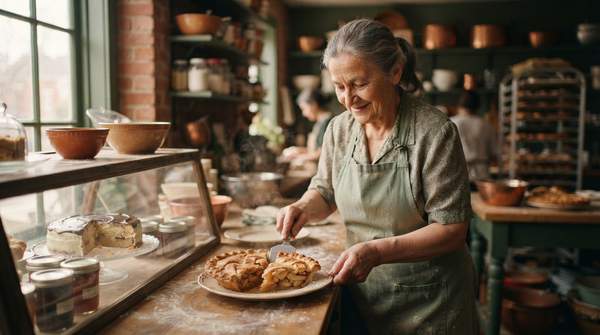
As regions were settled, Old World bakers tried new ideas and new ingredients, and at times their labors created something entirely new—sometimes unexpected—that captured the hearts and stomachs of their neighbors, as Susan Reid recounted for King Arthur Baking. That tapestry of regional desserts is part of the joy of American travel: if you want to get to know a new place, get to know what people point to with pride at their local bakeries. Lindsay Parrill, writing for Taste of Home, put it another way: these desserts tell stories about immigration, industry, literature, hospitality and regional pride, proving that some of America's most beloved sweets still carry their hometowns in every bite. The question is not whether desserts carry meaning, but how that meaning gets made.
Three Pathways to Regional Dessert Status: An Explanatory Model
Reading across these histories, three recurring pathways emerge. The first is Immigrant Adaptation: bakers who arrived with recipes from elsewhere and baked them into American life. The second is the Local Ingredient Showcase, where a dessert exists to celebrate—and often to economically champion—the produce of a particular place. The third is Commercial Invention and Folklore: a dessert created at a specific counter or kitchen, whose origin story becomes part of the region's identity, sometimes disputed and sometimes legislated into official status. Not every dessert fits neatly, and some origin stories conflict with one another. But the framework holds well enough to classify most regional sweets you will encounter.
The Regional Dessert Origin Pathways
Use this diagnostic framework to categorize any regional American dessert you meet. Ask where the recipe came from, what it showcases, and who tells its story; the answers usually point to one of the three pathways below.
| Origin Pathway | Dessert Example | Key Finding | Cultural Context |
|---|---|---|---|
| Immigrant Adaptation | Berger Cookies (Baltimore) | Old World bakers brought recipes with them and baked them into their new communities, sometimes creating something entirely new that captured their neighbors' affection | A general process of settlement-era baking rather than one documented recipe change |
| Commercial Invention | Boston Cream Pie | Created in the mid-1800s at Boston's Parker House Hotel, originally served as the Parker House "Chocolate Cream Pie" | A symbol of hospitality and regional pride; named Massachusetts' official state dessert in 1996 |
| Commercial Invention & Folklore | Banana Split | Credited to 23-year-old pharmacist David Strickler in Latrobe, Pennsylvania, with a first recorded newspaper mention in 1904 | A local hit that became a national sensation by the 1920s, appearing in Hollywood films |
| Local Ingredient Showcase | Marionberry Pie | A recipe passed down through generations, formalized through official state recognition | Reflects regional produce and agricultural interests |
| Cultural Context (cross-cutting) | Official state desserts | Dozens of states have legislated official desserts, sometimes to placate agricultural industries such as dairy or corn growers | Legislation formalizes a food's cultural status |
The classification works by tracing responsibility for the dessert's existence. A pathway is "immigrant" when the recipe traveled with a person, "commercial" when a named establishment or individual invented it, and "ingredient-driven" when the dessert's whole purpose is local produce. Where evidence conflicts—as it does for some desserts—the dispute itself becomes part of the folklore.
Case Study: The Boston Cream Pie – A Culinary Innovation from Hospitality
In the mid-1800s, Boston's Parker House Hotel was one of the country's great dining destinations, and the dessert we now know as Boston cream pie was created there, originally served as the Parker House "Chocolate Cream Pie." The name has always required a little generosity, as Parrill notes—it is a cake, not a pie. What makes it a textbook case of the Commercial Invention pathway is its institutional origin: a hotel kitchen, a named dining landmark, a dessert born of hospitality rather than home tradition. More than a century later it was still so beloved that Massachusetts named it the official state dessert in 1996, completing the journey from hotel menu to legal symbol.
Case Study: The Banana Split – A Pharmacist's Creation Turned National Treat
The banana split's paper trail begins in 1904, when a newspaper article described "a new dish served at Ligis restaurant" in Latrobe, Pennsylvania. The restaurant's owner was David Strickler, a 23-year-old pharmacist credited with inventing the dessert—a banana split in two, served with ice cream, chocolate sauce and various toppings. Strickler's creation quickly became a hit with locals and out-of-towners alike, and by the 1920s it had become a national sensation, served in ice cream parlors from coast to coast and even appearing in Hollywood films of the era. This is the Commercial Invention and Folklore pathway at full speed: a single documented inventor, a datable first mention, and a spread so rapid that the origin town's claim became part of the dessert's mythology.
Case Study: Marionberry Pie – Celebrating Local Bounty and Agricultural Identity
Not every dessert begins with an inventor. Some begin with a berry. Marionberry pie belongs to the Local Ingredient Showcase pathway: a recipe passed down through the generations, tied to the agricultural identity of its region. Mark Orwoll, writing for East West News Service, observed that you wouldn't think a dessert like marionberry pie would have to be formalized in any way—yet dozens of states have sought to legislate and celebrate their taxpayers' tastebuds. In some cases, such proclamations were passed to placate a specific agricultural industry, whether dairy farmers or corn growers. The marionberry pie example shows how a humble fruit dessert can be elevated into an official emblem of place, its cultural status written into law alongside the crops that made it possible.
Beyond the Plate: Cultural Significance and Official Designations
Official designation is where folklore becomes formal culture. The pattern repeats across the country: a dessert earns local affection, then a legislature codifies that affection into state symbolism—sometimes sincerely, sometimes, as Orwoll wryly suggests, because the solons were simply high on sugar. Orwoll also captures why these desserts resist travel: some belong so specifically to a place that even if they ship well physically, they lose something ineffable crossing state lines. A Coca-Cola cake, he argues, would be disgusting outside the South—but set him down in the Carolinas and he'll take two slices.
Disputed origins deepen rather than diminish this attachment; Mississippi Mud Pie, for instance, is variously credited to women in Hernando, Mississippi improvising with leftover cake mixes in the 1950s or to a New Orleans baker in the 1930s, and the uncertainty itself has become part of the dessert's story.
Recognizing the Enduring Legacy of Regional Desserts
To fully appreciate a regional dessert, consider its historical pathway—whether it emerged from immigrant ingenuity, local agricultural bounty, or a specific commercial innovation that captured the public's imagination. The reader can identify the primary origin pathway of a newly encountered regional dessert and articulate how it reflects local history and culture. The next time a bakery counter in an unfamiliar town offers something you have never seen, ask the three questions: who brought this recipe, what does it showcase, and who claims to have invented it? The answer will tell you as much about the region as any guidebook.
Sources
- The story behind these regional desserts — King Arthur Baking
- The Stories Behind America’s Most Iconic Desserts, from Baked Alaska to Texas Sheet Cake — Taste of Home
- The Intersection of Culture and Desserts Reveals Much About America — East West News Service