
Architectural Styles
5 articles
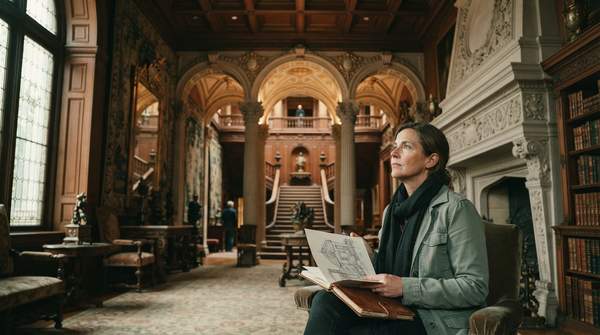
Beaux-Arts Symmetry or Fearless Eclecticism? How to Read a Gilded Age Estate
Gilded Age mansions communicated wealth and status through two primary architectural languages: the formal, classical Beaux-Arts style and a more eclectic approach that blended diverse historical elements. Understanding these distinct approaches reveals the owner's intended message of permanence or individual taste.
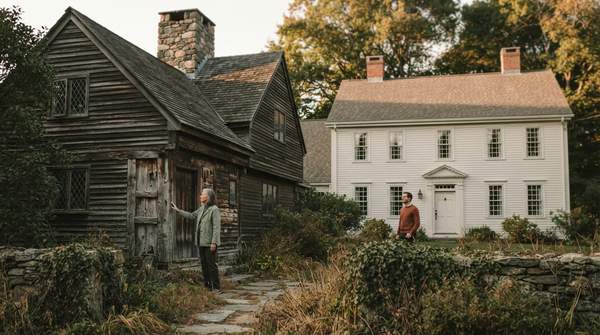
Telling the Original Colonial House from Its Twentieth-Century Echo
Most houses Americans call "colonial" are not colonial at all. Authentic Early American Colonial architecture (1640-1780) reflects medieval English traditions and practical needs, while the later Colonial Revival style (post-1876) refined these elements with symmetry and ornamentation.
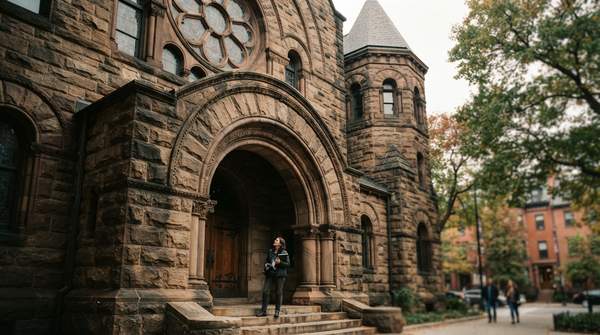
Round Arches and Heavy Stone: How to Recognize American Romanesque Revival Architecture
American Romanesque Revival architecture is identified by its thick stone walls, deep-set windows, and prominent rounded arches, often featuring robust towers and asymmetrical facades. This style, heavily influenced by H.H. Richardson, emphasizes massiveness and permanence, making it distinct from Gothic Revival's verticality.
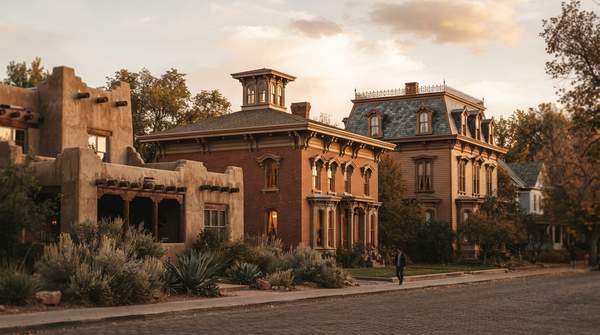
Three American Architectural Styles, Told by Their Rooflines: Pueblo Revival, Italianate, and Second Empire
Learn to identify three distinct American architectural styles by examining their unique rooflines. This guide explores Pueblo Revival, Italianate, and Second Empire, detailing their origins and signature features.

What are Southern estate architectural styles and why is preserving them important?
In Charleston, a 200-year-old antebellum mansion recently underwent a $15 million restoration.