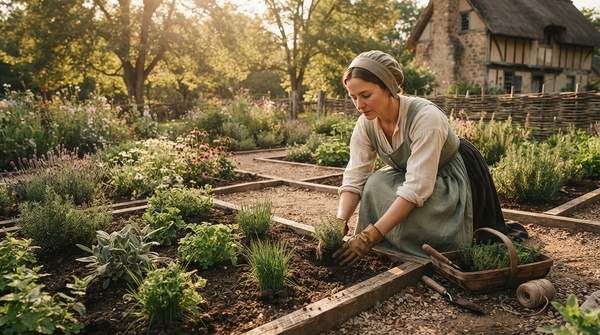
The classic American herb garden is rooted in the colonial dooryard: a formal square divided into four quadrants, each dedicated to a single purpose—cooking, healing, tea, or household work. That structure was never merely decorative. Colonial gardeners organized by use because herbs were essential to daily survival, and the same four-part plan works beautifully in a modern home garden. Here is how to build one, and how to fill it with historically appropriate plants.
Introduction: The Enduring Charm of Colonial Herb Gardens
In the eighteenth century, a garden was a symbol of well-being as much as a source of food and medicine, as the National Park Service notes in its account of colonial Virginian gardens, where people grew everything they could "not only for beauty, but health, wealth, and sustenance." Herbs carried much of that load. Without refrigeration, colonists relied on them for safe food storage and year-round flavor, according to the New Canaan Garden Club, which maintains a colonial herb garden at the New Canaan Museum & Historical Society. The same garden demonstrates why the tradition endures: many of the herbs planted there—parsley, rosemary, oregano, sage, and mint—remain staples in the modern kitchen.
The Quadrant Layout: A Foundation of Function and Form
The core design is simple: a square garden divided into four sections by crossing paths, each section devoted to a specific category such as dye herbs, medicinal herbs, culinary herbs, and tea herbs. Maine Organic Farmers and Gardeners describes this quadrant format as both functional and beautiful, and it is the classic starting point for a purpose-designed herb garden. The New Canaan Garden Club adds a practical rationale: the layout reflects historical practice, but it also made it easier for colonial gardeners to tend the beds and reach each plant. You gain the same benefit today—no plant is ever more than an arm's reach from a path.
Purpose-Driven Quadrants: Thematic Planting for Utility
Assign each quadrant a job before you choose a single plant. A culinary quadrant holds the seasonings and preserving herbs; a medicinal or apothecary quadrant holds the remedies that were often the only treatments available to early settlers; a tea and aromatic quadrant supplies daily drinks and fragrance; and a household quadrant covers cleaning, pest control, and dyeing. Herbs can serve many purposes, as a Wisconsin Gardener segment on PBS Wisconsin put it—teas, medicinal uses, dyeing, and food all draw on the same plants—so a few overlaps are historically honest. The point of the quadrants is not rigid separation but deliberate organization, so you always know where to reach when you need a specific thing.
Your Colonial Herb Garden Design Model
Use this model as your planning template: draw a square, cross it with two paths, and assign each quadrant one of the four traditional purposes below. The example herbs are drawn from historical and heritage-garden sources, with their documented colonial uses noted.
| Quadrant | Purpose | Example Herbs and Their Traditional Uses |
|---|---|---|
| Culinary | Flavoring and preserving food; these herbs were essential for daily cooking and food preservation in colonial households. | Parsley, rosemary, oregano, sage, and mint; sweet marjoram, used by colonial cooks to flavor meats; thyme, a colonial staple for seasoning meats, fish, soups, and breads. |
| Medicinal / Apothecary | Remedies for illness and injury; these plants were often the only available treatments for early settlers. | Agrimony, used to cleanse the liver and aid bowel disorders; feverfew, a traditional headache remedy; yarrow, used for treating wounds; foxglove, rue, valerian, and sage also appear in heritage medicinal beds. |
| Tea & Aromatic | Ingredients for daily drinks and fragrant additions to the home. | Mint, grown for its refreshing scent and brewed as tea; woodland violet, whose flowers added a sweet scent to washing water. |
| Household / Dye | Cleaning, pest control, and natural dyes—practical, non-culinary functions essential for colonial life. | Sweet marjoram, whose flowers produced a rare purple dye; sweet woodruff, used as a strewing herb, an insecticide in mattresses, and an air freshener hung from ceilings; agrimony's yellow flowers served as dyeing herbs. |
Notice how the model deconstructs the historical garden into structure plus function: the quadrants give you the geometry, and the purpose column tells you what belongs where. If your space is small, the same logic scales down—a four-plant Italian garden of basil, marjoram, oregano, and parsley in a container outside the back door, as suggested on PBS Wisconsin, applies the purpose-first principle in miniature.
Selecting Historically Appropriate Herbs for Your Garden
When you shop for plants, favor herbs with documented colonial pedigrees. The Peak House Heritage Center's colonial kitchen garden index offers a reliable checklist: comfrey, feverfew, foxglove, rue, sage, salad burnet, valerian, wild strawberries, and yarrow. Jeanne Grunert, writing for Mother Earth Living, adds wormwood—prized for its silvery-gray aromatic foliage—along with feverfew and yarrow to the list of colonial favorites. Feverfew seeds would have come over on the boat from the Old World, a reminder that "colonial" often means transplanted European tradition. Some plants carry cautions worth respecting: foxglove is the source of a potent heart medicine and belongs in a bed you admire rather than one you brew from.
Defining Your Space: Paths and Borders
Paths and edges hold the design together, and colonial practice gives you freedom here. The New England Unit of The Herb Society of America notes that colonists used whatever was readily available: bare earth, flat stepping stones, gravel, crushed seashells, or any local material. Geometrically shaped beds were common in colonial New England, and a rectangular layout is typical of plans used throughout the period. But keep the colonists' priorities in mind: the visual design of a country garden was secondary to topography, maximizing sunlight, and access to water. Site your quadrants where the sun falls, and let the paths follow.
Cultivating Your Own Piece of History
Design your herb garden using a quadrant layout, dedicating each section to a specific historical use—culinary, medicinal, tea and aromatic, household and dye—and selecting plants based on those traditional functions. The measurable indicator of success is a planted herb garden featuring distinct quadrants with historically appropriate herbs, reflecting both functional organization and aesthetic appeal. Start with the model above, choose one purpose per quadrant, and check your finished garden against it: four clear sections, four clear jobs, and every plant earning its place in the colonial tradition.
Sources
- Colonial Gardens (U.S. National Park Service) — NPS
- Colonial Herb Garden at the New Canaan Museum & Historical Society - New Canaan Garden Club
- Planting with Purpose — Maine Organic Farmers and Gardeners
- Designing and Planting an Herb Garden | The Wisconsin Gardener — PBS Wisconsin
- Plant Index - — Peakhouseheritagecenter