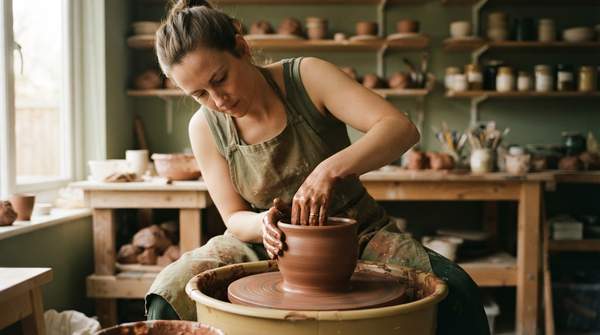
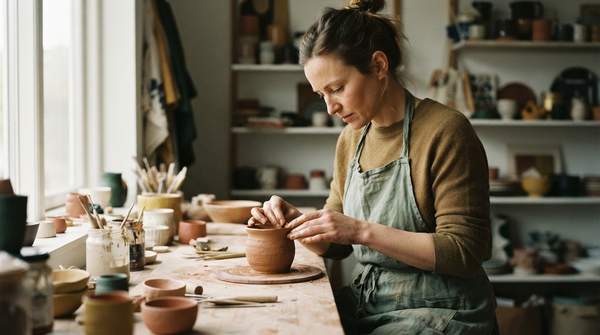
An annual craft fair in New Hampshire, now in its 92nd year, consistently draws approximately 20,000 guests over nine days, according to volunteernh. Simultaneously, the Irthi Museum is set to launch in Sharjah as the region's first institution dedicated to contemporary craft, as reported by A&E Magazine. The consistent draw of 20,000 guests to the New Hampshire craft fair and the launch of the Irthi Museum in Sharjah reveal a powerful, widespread revival of handcrafted goods and local craft markets. Many perceive artisan craft as a fading tradition, but it is experiencing a powerful resurgence driven by both grassroots enthusiasm and significant institutional investment. Based on growing visitor numbers, institutional support, and educational initiatives, the craft movement is poised to become a significant cultural and economic force, ensuring traditional skills thrive for generations.
A Groundswell of Local Support
- Tens of thousands attend the nine-day League of New Hampshire Craftsmen fair, featuring over 300 League members, according to WMUR. The consistent turnout of tens of thousands at the League of New Hampshire Craftsmen fair confirms robust community engagement with local craft markets.
- Artisans confirm younger generations increasingly support them, drawn by creators' stories and the unique experience of handmade goods, WMUR reported. Younger generations' increasing support for artisans, drawn by creators' stories and unique handmade goods, marks a clear shift towards valuing authenticity and connection in consumer choices.
This local enthusiasm, particularly from younger demographics, suggests a sustainable future for craft. It transforms craft from a niche interest into a mainstream cultural preference, challenging its traditional image. Consumers now actively seek products with a story, moving away from mass-produced items.
National and Global Institutionalization
The Irthi Museum, designated as the region's first institution dedicated to contemporary craft, is set to launch in Sharjah, A&E Magazine reported. The establishment of the Irthi Museum confirms a significant global recognition of craft's cultural importance and economic potential.
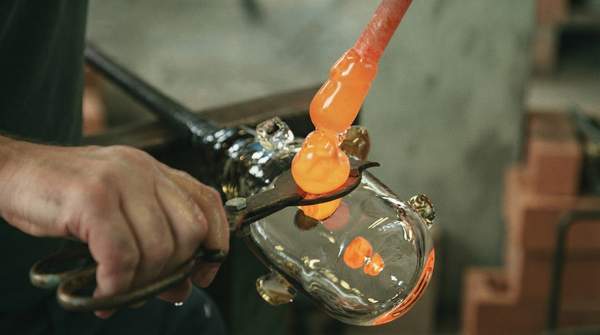
Concurrently, the Handwork 2026 initiative lists over 270 participants from across the United States and Puerto Rico, according to American Folklore Society. The widespread national participation of over 270 participants in the Handwork 2026 initiative validates the institutional support for artisan craft, showcasing its expansive reach and growing professionalization.
The emergence of new museums and large-scale national exhibitions confirms a global and national recognition of craft's cultural importance. This structured support elevates craft beyond a mere niche pursuit, positioning it as a serious cultural and economic sector. It suggests a future where craft is integrated into national cultural narratives, not just preserved as a historical artifact.
Cultivating New Generations of Makers and Patrons
The education component of Handwork 2026 includes an artist residency program across 10 colleges and universities, Biartmuseum states. The artist residency program across 10 colleges and universities, part of Handwork 2026, provides formal training and exposure, integrating craft into academic curricula and fostering new talent.
In a counterintuitive strategy, the League of New Hampshire Craftsmen launched the 'Spirit of the Maker' program, pairing craftspeople with local craft breweries, WMUR reported. The 'Spirit of the Maker' program, pairing craftspeople with local craft breweries, modernizes the appeal of artisan work and attracts new, younger audiences. The program successfully bridges tradition with contemporary culture.
Educational programs and innovative community partnerships are crucial for the longevity and evolution of craft traditions. These efforts engage new talent and audiences, moving craft beyond mere preservation to active relevance in modern society. The 'Spirit of the Maker' program proves that authentic, story-driven products can thrive in a fast-paced economy, shedding a "dusty" image and securing craft's economic viability.
The Future of Craft: Preservation and Innovation
The Irthi Museum explicitly aims for research, education, design innovation, collection development, and public engagement to keep indigenous crafts relevant for future generations, A&E Magazine details. The Irthi Museum's comprehensive approach, aiming for research, education, design innovation, collection development, and public engagement, confirms that the global craft movement actively engineers its future relevance by integrating modern business and educational strategies.
The Irthi Museum's strategic institutional support creates clear pathways for artisans to both preserve their heritage and innovate within their practices. Craft is positioned to remain dynamic and globally connected, moving beyond traditional preservation to active evolution.
With initiatives like Handwork 2026 encompassing national exhibitions, academic publications, and university residency programs, the institutional backing for artisan craft marks a significant cultural shift. The institutional backing for artisan craft, through initiatives like Handwork 2026, positions craft as a legitimate academic and artistic discipline. The Renwick Gallery of the Smithsonian American Art Museum will host 'Handwork: Contemporary Craft from the Renwick Collection' in November 2026. The Renwick Gallery's hosting of 'Handwork: Contemporary Craft from the Renwick Collection' re-evaluates craft's intellectual and aesthetic value, attracting new scholars and patrons.
The Enduring Craft Movement
The economic vitality of artisan markets, exemplified by over 700 juried craftspeople producing for the League of New Hampshire Craftsmen, confirms their direct contribution to local economies and the preservation of unique skills. The sector's increasing formalization, evident in the June 2026 release of 'Handwork: Handcrafted Objects that Made America', points to a robust supply chain of skilled professionals and a substantial consumer base. This trajectory suggests that if institutional support continues to converge with grassroots enthusiasm, the craft movement will likely evolve beyond mere preservation, becoming a pivotal cultural and economic force that actively shapes future generations' appreciation for handmade excellence.