In Romblon, the Philippines, the marble-carving industry faces a critical juncture. The sector is now procuring robotic arms, related technologies, and supportive policies, with implementation expected by the end of 2026, to assist local artisans and address a dwindling workforce of younger individuals, according to BusinessWorld Online. The procurement of robotic arms, related technologies, and supportive policies reflects a direct technological response to a labor shortage in a craft traditionally defined by manual artistry.
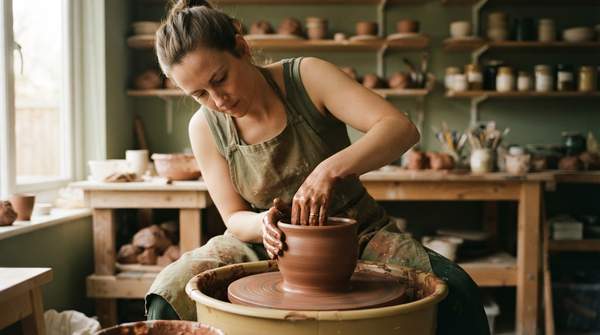
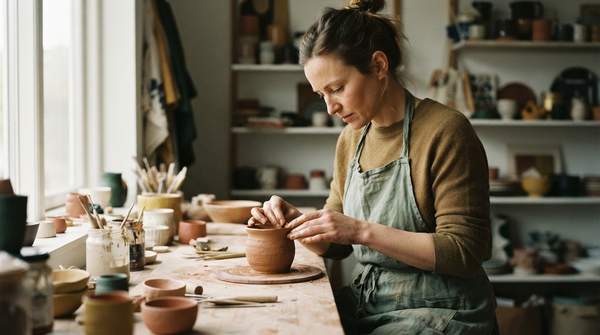
Traditional crafts are valued for their historical continuity, yet their enduring survival increasingly relies on embracing modern innovation and commercial viability. This tension stretches the very definition of what constitutes a "traditional craft" as new methods become essential for their future. For example, Yang An, a fifth-generation inheritor of the Xixia porcelain-making craft, opened a studio in a tourist area in 2021, offering visitors hands-on experiences with the craft, according to Xinhua.
Crafts that strategically integrate technology, formal recognition, and direct market engagement are poised for a vibrant resurgence. Conversely, those that resist these modern adaptations risk obsolescence, highlighting a fundamental alteration of historical identity to ensure future relevance. Preserving traditional crafts against modern pressures in 2026 demands this adaptive approach.
Formalizing Quality and Heritage for Global Relevance
Official recognition and technological upgrades standardize and protect traditional crafts, enabling them to compete in modern economies. The Xixia porcelain-making craft gained inclusion on Ningxia's list of representative regional intangible cultural heritage projects, according to Xinhua. This formal listing provides a framework for cultural preservation and promotion.
In Jammu & Kashmir, 63 crafts are now GI-registered, with 97,178 Geographical Indication labels issued to date, according to Greater Kashmir. These registrations establish authenticity and protect against counterfeiting, enhancing market value. Such formalization helps these crafts gain market viability and ensures quality control, allowing them to compete in modern economies.
The Pashmina Testing & Quality Certification Centre (PTQCC) underwent an upgrade with advanced equipment, according to Greater Kashmir. This enhancement boosted testing capacity by nearly three-fold and reduced wait times by 40%. The upgrade highlights a critical shift: the future of high-value traditional crafts relies on industrial-level quality control and efficiency, demanding significant technological investment to maintain market relevance and combat counterfeiting.
Cultivating New Generations and Economic Growth Through Engagement
Structured support, economic opportunities, and public engagement revitalize crafts and attract new participants. From 2021 to 2025, China established over 12,900 intangible cultural heritage workshops nationwide, according to Xinhua. These workshops provide dedicated spaces for skill transmission and production.
Jammu & Kashmir has registered nearly 5 lakh artisans and weavers, according to Greater Kashmir. This large-scale registration program formalizes the workforce and provides a basis for organized support. The massive establishment of workshops in China alongside the formal registration of artisans in Jammu & Kashmir reveals a global strategic pivot: governments are actively transforming cultural preservation into an economic engine, leveraging heritage for job creation and tourism rather than merely safeguarding it.
The proliferation of hands-on workshops and studios in tourist areas indicates a strategic pivot towards the experiential economy. Passive appreciation of crafts is transformed into active, revenue-generating engagement. Such initiatives attract new audiences and potentially new artisans, ensuring the continuity of these valuable skills.
The Evolving Definition of Traditional Crafts
The implicit value of 'historical continuity' for traditional crafts, exemplified by Xixia porcelain being added to Ningxia's intangible cultural heritage list, directly confronts the explicit need for 'modern innovation' for their long-term survival, as demonstrated by Romblon's marble industry procuring robotic arms. This tension stretches the definition of 'traditional craft' itself. It requires a re-evaluation of what constitutes authenticity when technology becomes integral to production, rather than merely a tool for efficiency.
The adoption of advanced technology, such as robotic arms, serves as a direct response to a critical shortage of young workers willing to enter labor-intensive traditional crafts. Evidence of this is found in Romblon's marble industry, where technology increasingly replaces declining human capital. Companies and regions that fail to integrate automation into labor-intensive traditional crafts, as seen with Romblon's marble industry procuring robotic arms, risk the complete collapse of these industries due to an irreversible decline in skilled human labor. This shift is not just about production, but about survival.
Investment in advanced testing equipment, like the upgraded Pashmina Centre, demonstrates that technology is vital for scaling quality assurance and efficiency in traditional craft production. This moves these crafts from an artisanal niche to a more standardized, high-volume market without compromising integrity. The emphasis shifts from solely manual skill to a hybrid model that incorporates technological precision, ensuring products meet contemporary market demands for consistency and quality.
This strategic pivot towards integrating technology and formal support ensures the economic viability of traditional crafts. It also secures their place in future markets by broadening their appeal and production capabilities. Without these adaptations, many crafts face the prospect of fading away due to economic pressures and a lack of generational interest in labor-intensive methods, highlighting the dynamic nature of cultural preservation in the 21st century.
What are the biggest threats to traditional crafts today?
The biggest threats to traditional crafts include a decline in skilled younger workers, limited market access, and intense competition from mass-produced goods. Evidence of this is found in Romblon's marble industry, which is procuring robotic arms to address the declining number of younger workers, according to BusinessWorld Online. Without intervention, these factors impede the transmission of skills and the economic viability of craft enterprises.
How can traditional crafts be kept alive?
Traditional crafts can be kept alive through formalization, technological integration, market engagement, and structured skill transmission programs. The registration of nearly 5 lakh artisans in Jammu & Kashmir and the establishment of over 12,900 intangible cultural heritage workshops in China exemplify this multi-faceted approach, according to Greater Kashmir and Xinhua respectively. These strategies create economic incentives and ensure cultural continuity.
What is the economic impact of traditional crafts?
Traditional crafts generate significant economic impact through job creation, tourism revenue, and the preservation of cultural heritage. For example, the formal registration of 5 lakh artisans in Jammu & Kashmir directly supports livelihoods. The experiential workshops, such as Yang An's Xixia porcelain studio, also attract tourists, creating revenue streams and fostering engagement with the craft.