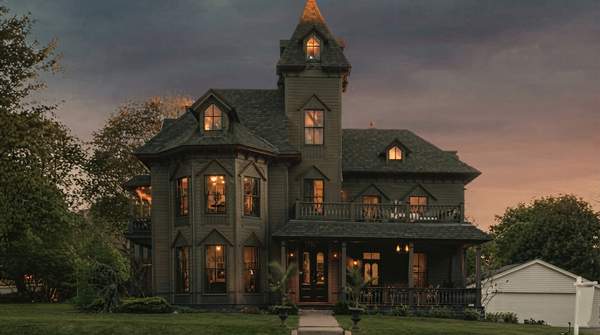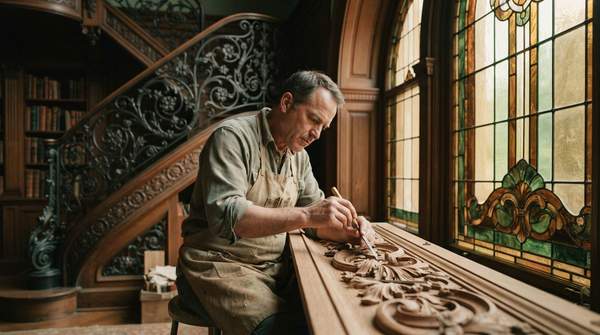
Three artisanal architectural elements—hand-carved woodwork, custom stained glass, and hand-forged ornamental metalwork—carry the strongest documented craft traditions in exceptional American properties. Each traces its lineage through the Gilded Age, the era of opulent American architecture from the 1870s to the early 1900s, and each rewards the discerning buyer or homeowner who can read its technique, history, and placement. This guide compares the three, explains the traditions behind them, and offers a framework for recognizing and valuing them in an existing property or a custom build.
Carved Wood: Craftsmanship, History, and Aesthetic Impact
Hand-carved woodwork is the quiet backbone of a great interior. In traditional joinery and period architecture, its decorative elements do more than please the eye: as restoration studio John Canning & Co. explains, they "convey beauty but also demonstrate structure, proportion, and hierarchy within a design." In most cases, the ornamental woodwork has an underlying structural function or purpose that was subsequently adorned on the face—a carved panel, in other words, is often a dressed-up piece of the building's logic rather than a surface appliqué.
The vocabulary of this carving is classical. Many carved details align with the Doric, Ionic, and Corinthian orders, each a distinct design language that influenced later movements such as the Arts and Crafts and Beaux-Arts styles. That lineage matters when evaluating a property: a dining room lined in carved wood panels speaks a specific architectural dialect, one a buyer can learn to identify.
The American record makes this vivid. A Beaux-Arts mansion off Fifth Avenue in New York, built in 1902 by architects James R. Turner and William G. Killian with interiors by John Russell Pope—the designer behind the Jefferson Memorial—retains its formal dining room lined in carved wood panels, as ELLE Decor's Geoffrey Montes reports. The panels survive alongside the home's stately proportions, a reminder that carved woodwork was integral to how Gilded Age architects composed a room, not an afterthought.
Recognizing quality carved wood, then, means looking past the surface pattern to the joinery beneath it. Canning & Co. notes that identifying these elements helps conservators, architects, and restoration specialists make informed decisions during restoration, conservation, or reproduction projects—the same skill a buyer can apply when assessing whether a home's woodwork is original, faithful, or merely imitative.