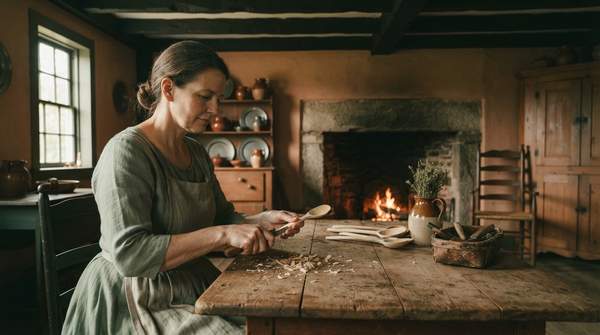
Authentic American Colonial interior design is the look of 17th- and 18th-century settler homes, before American independence: simple, functional rooms built from whatever materials the local landscape offered, furnished with handmade wooden pieces and softened by homespun textiles. It is often confused with Colonial Revival, a later and far more decorative reinterpretation that emerged in the late 19th century and swept through early 20th-century suburbs. The two share a family resemblance, but they differ in philosophy, furniture, color, and materials.
The Enduring Appeal of American Colonial Interior Design
The original style was born of necessity. As one period-decorating guide puts it, the American Colonial style "was initially influenced by practical considerations," because fancy soft furnishings were not a priority for the first settlers. What those constraints produced, though, has proven remarkably durable: an aesthetic of modest comfort, natural texture, and quiet order that designers still reach for today. Its appeal lies in honesty. Nothing in an authentic Colonial room pretends to be grander than it is; the beauty comes from wear, workmanship, and the raw character of wood, plaster, and homespun cloth. That is precisely why later generations kept returning to it—first as a memory, then as a romanticized revival.