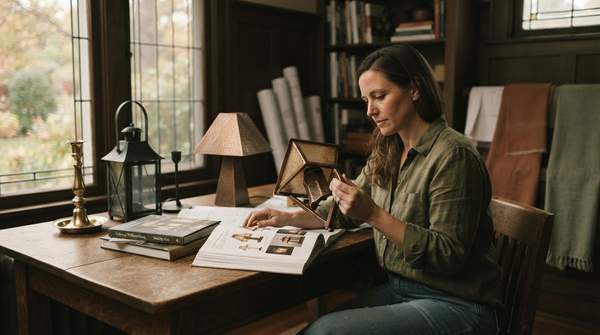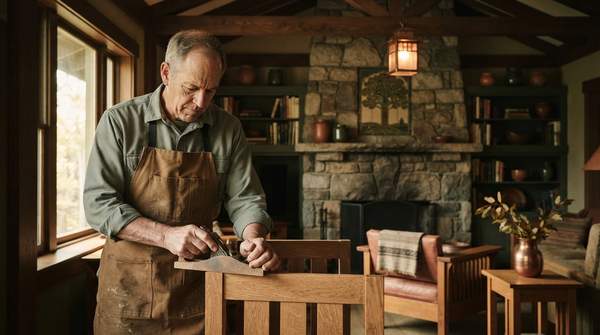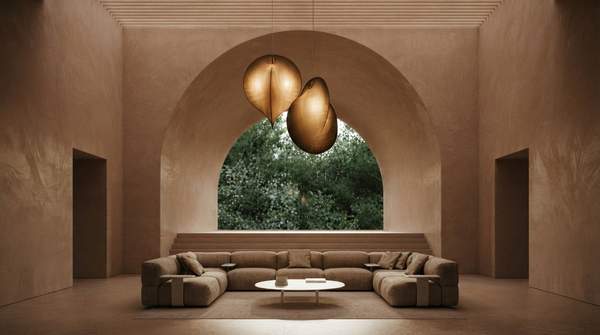
Slow design is a way of furnishing a home that refuses the churn of trends. Rather than decorating quickly and replacing often, it asks you to choose fewer, better things—pieces made with care, built to last, and chosen because they mean something to you. The concept originates with Carolyn F. Strauss and Alastair Fuad-Luke, who outlined its principles as "tools and strategies for evaluating design with a view to social, cultural and environmental sustainability." Applied to interiors, it becomes a practical discipline, and this article gives you a working framework for it.
What is Slow Design for Your Home?
Slow design began as a broader design philosophy, born partly from the Slow Food movement, and its application to home interiors is one specific interpretation of that movement. In a domestic setting, it means creating spaces that are intentionally designed rather than rapidly assembled. Andrea Claire, writing about the approach in interiors, describes it as "the idea of creating spaces that are intentionally designed to promote connection with oneself."
The contrast with commercial design is sharp. Where commercial design emphasizes marketability, brand recognition, and the latest trends, slow design favors what Claire calls "unique, unconventional, timeless, and resilient" results. A slow home, in her framing, is one that "melds sustainability, practicality, and flexibility"—not a home that looks virtuous, but one that works, adapts, and holds meaning over years of living.
The Core Principles of Slow Design
Across the sources, a consistent set of values emerges. Patience and time come first: slow design values taking time to design, reflect, and create something meaningful, "carefully considering every aspect of the design process, rather than rushing," as Claire puts it. Craftsmanship and tactility follow—traditional techniques and natural materials over anonymous mass production.
Sustainability runs throughout: environmentally friendly design with minimal planetary impact. Then there is adaptability. Apartment Therapy's Katie Holdefehr notes that "adaptability is one of the main principles of Slow Design, as the movement values modifying to meet future needs, rather than throwing away in order to buy new." Finally, there is the dimension the design world sometimes overlooks—personal meaning. The home décor publisher DROOL describes the goal as "homes filled with pieces that have personal meaning and are made to last," spaces that reflect individual style and values rather than whatever is currently fashionable.
Slow Design Home Evaluation Checklist
Use this checklist to assess any home item—an inherited armchair, a lamp you are considering buying, a rug you already own. This synthesis combines the principles from multiple sources into a structured evaluation framework, so it is our interpretation of the movement rather than a canonical test. Work through each dimension and note where an item scores strongly or weakly.
| Dimension | Guiding questions | What a strong answer looks like |
|---|---|---|
| Material & Sourcing | What is it made of? Local, recycled, or natural materials? Is the sourcing transparent? | Natural or reclaimed materials with a source you can name or verify. |
| Craftsmanship & Construction | What techniques built it? Do materials and construction suggest it will survive daily use and repair? | Traditional or skilled techniques, robust materials, designed to last rather than be replaced. |
| Timelessness & Longevity | Will it still suit your home in five or ten years? Is it modular or adaptable to changing needs? | Clean lines, restrained ornamentation, and the ability to be modified or repurposed rather than discarded. |
| Personal Connection & Story | Does it resonate with your history, values, or aesthetic? Would you mend it rather than replace it? | An item you would move house with—something with a story you can tell. |
| Environmental Impact | What happens at the end of its life? Who made it, and under what conditions? | Long service life, repairability, and makers or processes you feel comfortable supporting. |
No single item will score perfectly on every dimension, and that is fine. The purpose is to make the trade-offs visible: a mass-produced but genuinely useful and long-lived piece may serve you better than a fragile handmade one you are afraid to use.
Applying the Framework: Auditing Existing Items
Start with what you already own before acquiring anything new. Walk room by room and run each significant piece through the checklist. The point is not to condemn what fails, but to notice which items you barely see, which carry weight, and which were bought for a moment that has passed. Slow design encourages exactly this kind of reflection—thinking about "where a product came from and appreciate its qualities," as Claire writes.
An audit often changes your relationship to existing possessions. A chair that felt dated may reveal, under the framework's questions, honest construction and a form that suits your home better than anything new. Repairing, reupholstering, or simply keeping a well-made piece is itself a slow design decision: it embodies the movement's preference for modifying to meet future needs rather than discarding. Items that fail on every dimension—flimsy, anonymous, replaceable—become your clearest candidates for gradual replacement.
Applying the Framework: Thoughtful New Acquisitions
When something does need replacing, the same five dimensions govern the purchase. Research before buying: ask what the item is made of, who made it, and how it was produced. Holdefehr's guidance for the movement is to "shop handmade and fair trade," noting that slow design "isn't just about the products created, but also about the people and process behind them."
Prioritize quality over quantity, and build patience into the process itself. Slow design values taking time to consider every aspect rather than rushing, which in practice means living with a gap—an empty wall, a borrowed chair—until the right piece appears, rather than filling it this weekend. Choose versatile and classic forms that can adapt: pieces usable in multiple ways and places, as the adaptability principle suggests. DROOL's decorating guidance frames the whole endeavor as rejecting "the fleeting nature of trends in favour of timeless aesthetics," so a reliable test for any purchase is whether you would still want it if no one else ever saw it.
Making the Shift to a Slow Home
Readers should commit to a more intentional and patient approach to furnishing and decorating their homes, prioritizing quality, sustainability, and personal meaning over rapid consumption. This is not a one-weekend renovation but a gradual reorientation of how a home accumulates.
The measurable indicator that the shift is working is concrete: a noticeable reduction in impulse purchases for home decor, an increase in research time before acquiring new items, and a greater appreciation for existing possessions. Those three changes are observable in your own household within months. A slower home does not arrive fully formed—it accumulates, decision by deliberate decision, until the space reflects the person living in it.