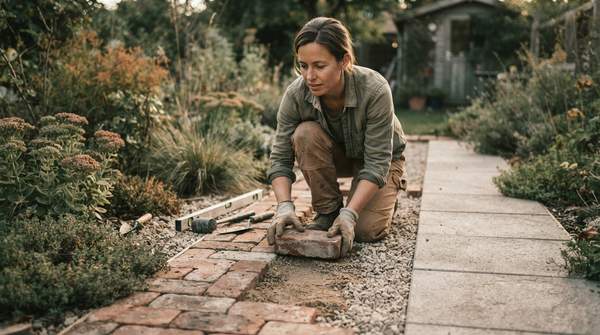
The central trade-off in a garden path is simple: pay more upfront for decades of low-effort durability, or pay little now and spend your weekends weeding and raking. Brick and paver paths run $9 to $20 per square foot for materials and can last 25 to 40 years, while gravel costs as little as roughly a dollar per square foot but demands regular renewal. Concrete sits between them in cost, lasts 30 to 50 years, and suits high-traffic and accessibility needs. Here is how the three classics compare.
Brick and Pavers: Timeless Charm and Enduring Strength
Brick and pavers are the splurge option, and the price buys longevity. A well-installed paver or brick path lasts 25 to 40 years, according to landscaping cost data compiled by Amanda Shiffler at LawnStarter, with little upkeep beyond occasional power washing and replacing the joint sand that locks the pieces together.
The payoff is aesthetic. Shiffler describes the look as "pricey but gorgeous," with a wide range of materials, colors, and patterns to match your garden's style. Garden writer Alexandra Campbell notes brick is among the most expensive path options but can last "for decades – or even centuries," while a landscape comparison guide places brick and pavers squarely in the "classic, formal garden design" and "high-traffic, formal layouts" camps.
Know the downsides before committing. Installation is tedious, expensive, and labor-intensive — Shiffler warns that even a DIY effort can consume most of a weekend. Weeds can grow through the cracks between individual pieces, though that same modular construction lets the surface accommodate freeze-thaw cycles, and permeable paver systems let water seep in and reduce stormwater runoff.
Gravel Paths: Natural Appeal and Flexible Design
Gravel is the budget builder's favorite, with material costs reported between roughly $0.78 and $1.70 per square foot — though that figure is for the gravel itself, not the base materials or edging beneath it. The look is casual and natural, and one quality no other material offers: the crunch underfoot that many gardeners love.
But the savings come with strings. Campbell, writing at The Middle-Sized Garden, points out gravel is relatively inexpensive but will need renewing every five years or so, and it can need more weeding than other options. A landscape comparison guide rates gravel's durability as medium and flags it as best for drainage-heavy areas and casual, informal paths.
Practically, gravel also has quirks Shiffler's guide makes clear: it's hard on feet and knees, and gravel that migrates into the lawn becomes a safety hazard when mowing. A proper base and firm edging help keep the material from scattering and preserve the path's shape over time.
Concrete Paths: Modern Versatility and Low Upkeep
Poured concrete splits the difference: Shiffler's cost data puts an average concrete sidewalk at $5.89 to $12 per square foot, well below brick and above gravel. In exchange, you get a flat, even surface that lasts 30 to 50 years when properly maintained, with durability and maintenance both rated high and low respectively in the landscape comparison guide.
Concrete earns its place where function outranks flourish. It works well in high-traffic areas and is the guide's recommendation for wheelchair or stroller access — the one material among the three that answers accessibility needs directly. Campbell adds that concrete pavers are inexpensive and low-maintenance, though she observes they rarely look as good as real stone or brick.
That aesthetic gap is concrete's honest weakness. As Shiffler notes, concrete is less common in gardens simply because homeowners often prefer prettier materials. If your path leads past a rose border, concrete may feel utilitarian; if it connects a driveway to a side door, it's hard to beat.
Garden Path Material Comparison: Cost, Durability, and Maintenance
The table below puts the three materials side by side. The pattern it reveals: cost and maintenance move in opposite directions. The materials that cost the most per square foot — brick and pavers — demand the least ongoing effort, while gravel inverts the equation.
| Material | Relative Cost (per sq. ft.) | Durability / Lifespan | Maintenance Level | Aesthetic Style / Use Case |
|---|---|---|---|---|
| Brick/Pavers | $9–$20 (materials only) | High; 25–40 years if well installed | Low; occasional power washing, joint-sand replacement | Classic, formal, highly customizable; suits high-traffic layouts |
| Gravel | $0.78–$1.70 (gravel only; base and edging extra) | Medium; renew every ~5 years; can shift over time | Medium to high; weeding, raking, replenishment | Natural, casual, good drainage; that signature crunch underfoot |
| Concrete | Medium to high ($5.89–$12 reported average) | High; 30–50 years when properly maintained | Low | Functional; heavy foot traffic and wheelchair or stroller access |
All cost figures reflect material or average prices reported by LawnStarter and do not include professional installation labor, which for pavers in particular is expensive and time-consuming. Lifespans assume proper installation, quality materials, and suitable conditions.
Your Ideal Path: A Decision Framework
Homeowners should select a garden path material by prioritizing their budget, desired aesthetic, and long-term maintenance commitment, understanding the trade-offs between initial investment and ongoing effort. Campbell frames it well: the right choice "depends on your lifestyle, budget, how much maintenance you're happy to do and what you want your garden to look like."
Work through three questions in order. First, budget: if material cost per square foot is the binding constraint, gravel wins. Second, upkeep: if you're unwilling to weed, rake, and replenish every few years, choose brick, pavers, or concrete. Third, style and purpose: formal gardens call for brick, casual naturalistic spaces suit gravel, and functional or accessibility-focused routes point to concrete.
You've made a sound choice when you can articulate your material's expected cost, durability, maintenance, and aesthetic contribution to your garden design. By that measure, the decision is made not at the garden center but on paper — and a 40-year paver path versus a five-year gravel renewal is a comparison best made before the first shovel, not after.
Sources
- 12 Materials to Consider for Your Garden Path — Lawnstarter
- Garden path materials - the good, the bad and the beautiful — The Middle-Sized Garden
- Best Materials for Garden Paths: 8 Options Compared — Adam Gorski Landscapes