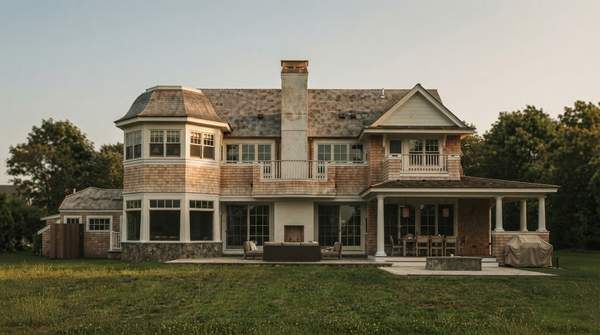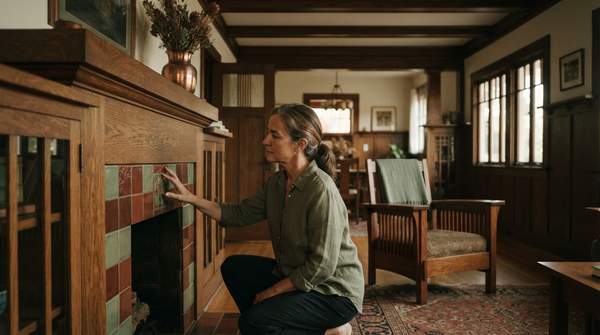
An American Arts and Crafts home announces itself quietly. You will not find the machine-made ornament of the Victorian era it rebelled against; instead, you will find exposed rafters reaching past the roof line, oak and stone left honest and unadorned, built-in bookcases that seem to have grown out of the walls, and a fireplace that anchors the whole room. The Chicago Architecture Center's encyclopedia entry on the style lists exactly these traits — structural "authenticity," native materials, open plans with built-ins, and the visible "hand of the artist" — and each one exists for a reason. This guide walks through those features, connects them to the movement's founding philosophy, and ends with a checklist you can carry through any house.
Identifying American Arts and Crafts Architecture: Exterior Features
Start outside, because the exterior is where the movement's core idea — what architectural historians describe as "truth in architecture" — becomes visible. A building in this tradition should clearly express its structure, function, and material, with no applied decoration obscuring what holds it up. That clarity was, in part, a practical matter: the aesthetic could be achieved without machines, which the movement's founders distrusted on principle.
So look up. Exposed beams, strong posts, and rafters that extend past the roof line are signature moves, and they are not decorative gestures — they are the skeleton shown proudly through the skin. The contrast with the ornate, multicolored, machine-made Victorian facades then in vogue in England was deliberate and sharp.
Then look at the walls. Native materials dominate: wood, especially oak, locally sourced stone, stucco, and brick. Patricia Poore, writing for Arts & Crafts Homes Online, adds a useful corrective for anyone who pictures the style as all wood, all the time — except in woodsy locations, wood doesn't necessarily predominate, and stone, cement, adobe, and tile are common, with brick appearing where the material has local precedent. That word "local" is the tell. The house was meant to belong to its place, in earth tones that echo the landscape around it.